
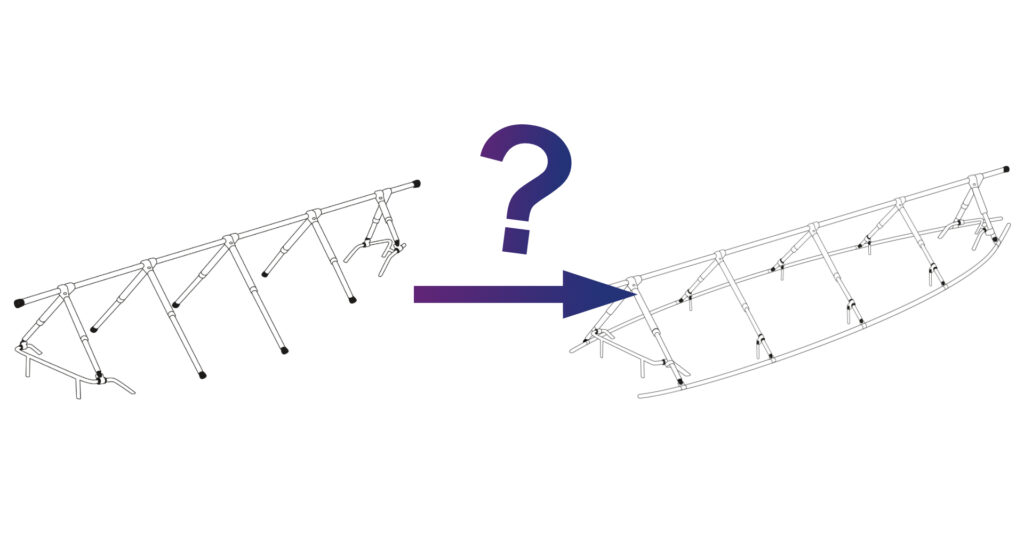
Converting a Deck frame to an Outlaying frame
At NOA, we pride ourselves on designing high-quality, Swedish-made, modular aluminium cover systems. This design philosophy ensures that your NOA frame is a long-term investment that can be customized and adapted as your needs evolve—even if you change your boat!
If you currently own a standard NOA Deck Cover Frame, you can easily expand it with additional components to convert it into an Outlaying Frame. This modification offers significant benefits:
Improved Ventilation
The outlaying design creates a larger air gap, minimizing condensation and moisture buildup, which is crucial for preventing mold and mildew.
Hull Protection
The tarpaulin is held further away from the hull, eliminating chafing and protecting your boat’s finish throughout the winter.
The shopping list
To successfully convert your existing Deck Frame into an Outlaying Frame, you will need to purchase the following products.
- Conversion kit pulpit legs (Only on kit needed)
- Outlaying tubes (Choose a kit that matches the lenght of your deck frame)
- Fittings for outlaying tubes (Choose one kit for each deck leg, pulpit and pushpit included)
Investigate which stanchion kit below you´ll need.
Peg v.s hole

It can be difficult to distinguish between our connecting tubes for the two most common types of stanchion bases just by visual inspection, as the dimensional differences are very small. Both tube types share the same length and are fitted with identical plastic fork end fittings.
The crucial distinction, however, is in the tube’s outer and inner diameters. This is the most important measurement to ensure you select the correct tube for your base type.
Our tubes, intended for stanchion bases with holes, have an outer diameter (OD) of 25 mm and a hole diameter (ID) of 21 mm. In contrast, our tubes for bases with solid pegs have a larger outer diameter (OD) of 28 mm and a hole diameter (ID) of 23.3 mm.

Converting the deck legs
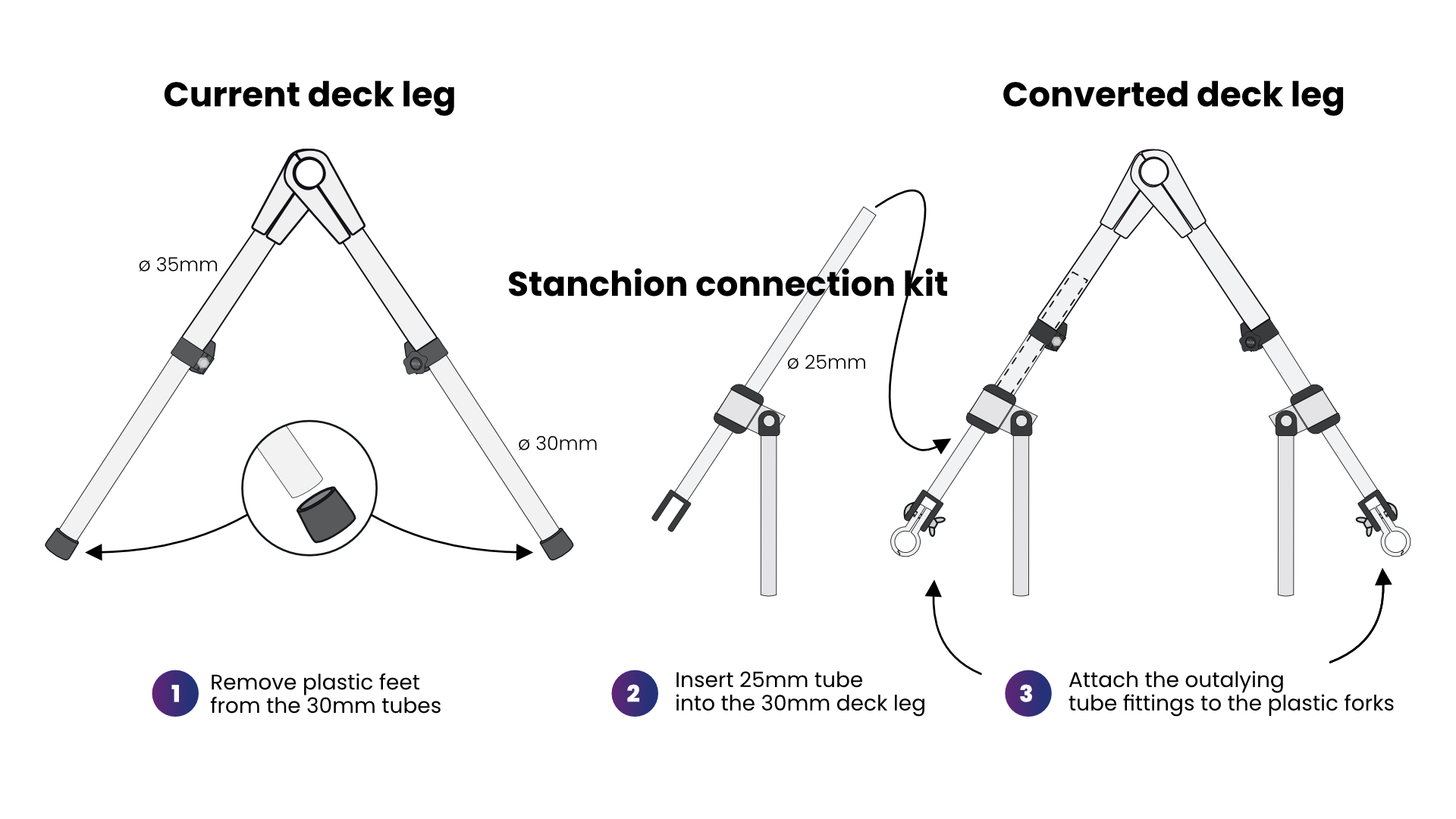
The leg assembly of an outlaying frame does not rest on the deck in the same manner as the legs of a deck frame. The topmost 35 mm tube of the leg pair is clamped to the overlaying tube using the designated fitting, exactly as it is for a deck frame.
The key difference is the middle 30 mm tube, which telescopes into the upper 35 mm section. This tube no longer features a plastic foot; instead, it now slides onto a smaller 25 mm tube.
This 25 mm tube is the final section that accommodates the stanchion connector, which is the primary point where the leg pair rests and transfers its weight to the stanchion fitting (with a hole or a peg). Finally, the fitting that secures the outlaying tube in its extended position is attached to the outermost end of the 25 mm tube.
Summary
This guide detailed how to upgrade your high-quality NOA Deck cover frame to an Outlaying cover frame, a modification that offers significant long-term benefits for your boat’s winter storage. By converting to the outlaying design, you achieve improved ventilation through a larger air gap, which effectively minimizes condensation and potential moisture issues. Crucially, the tarpaulin is also held further away from the hull, providing superior protection against chafing.
To successfully complete the conversion, you will need to acquire specific new products. It is essential that you perform a visual inspection to ensure you choose the correct connecting components (like the ‘hole’ or ‘peg’ type) that align perfectly with your boat’s existing setup.
This conversion is a valuable investment in your boat’s longevity and protection. If you need any advice on component selection or have questions during the installation, please don’t hesitate to contact our customer support team for guidance.